The History of Citroën: From André’s Genius to the DS Flying Saucer.
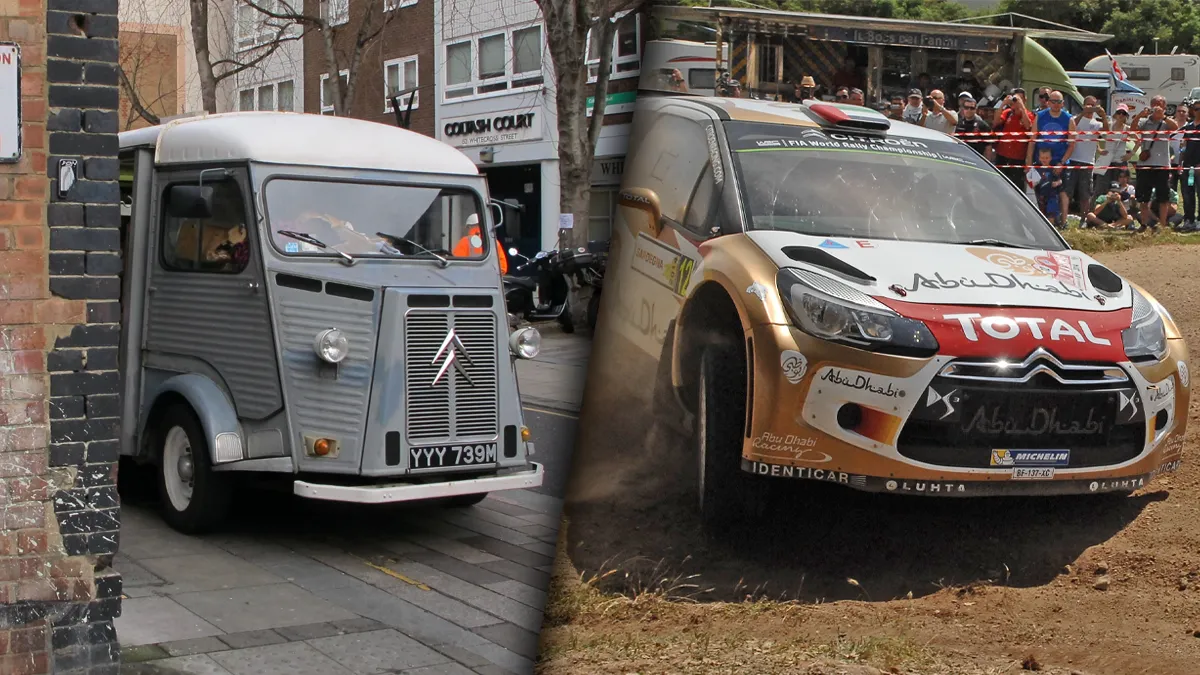
In the French motoring world, there are those who follow the rules and then there is Citroën. For more than 100 years, the double-chevron brand has cultivated a fundamental difference: technology must not only serve performance, it must serve comfort and the art of living.
But did you know that it all began with a trip to Poland and a story about gears? A look back at the saga of France’s most creative carmaker.
1. 1900: The origin of the chevrons
It all began long before the cars. In 1900, on a family trip to Poland, the young André Citroën (a brilliant graduate of the École Polytechnique) discovered an innovative process for cutting wooden gears with “V”-shaped teeth (chevrons).
He bought the patent, adapted it to steel in France and made his fortune. These gears were quieter and stronger.
Look at the badge on your Citroën: those are not arrows pointing to the sky, they are those famous double gears, stylised.

2. 1919: The European Henry Ford
Having converted his munitions factory on the Quai de Javel into a car plant at the end of the First World War, André Citroën had a vision: to bring the motor car to the masses.
He launched the Type A in 1919. It was the first European car built in large series (on an assembly line), sold complete with bodywork, tyres and a spare wheel (which was rare at the time!).
André was also a marketing genius:
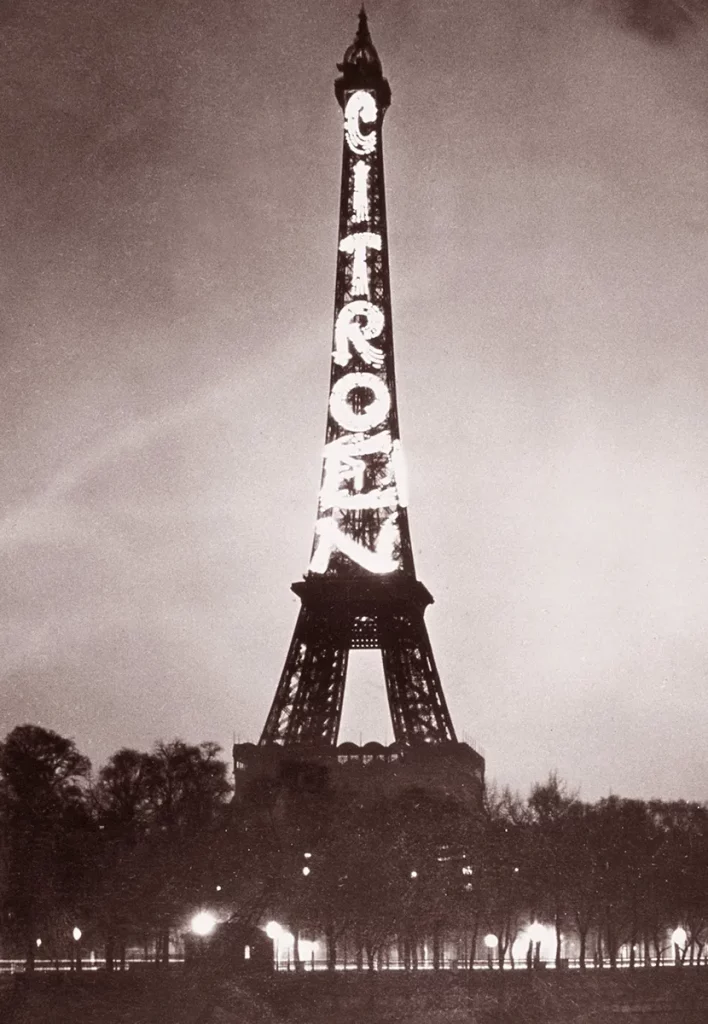
- He had “CITROËN” written in illuminated letters 30 metres high on the Eiffel Tower (from 1925 to 1934).
- He launched the “Croisières” expeditions (Black, Yellow, White) to prove that his half-tracks could cross deserts and the Himalayas.
3. 1934: The masterpiece and the bankruptcy (the Traction)
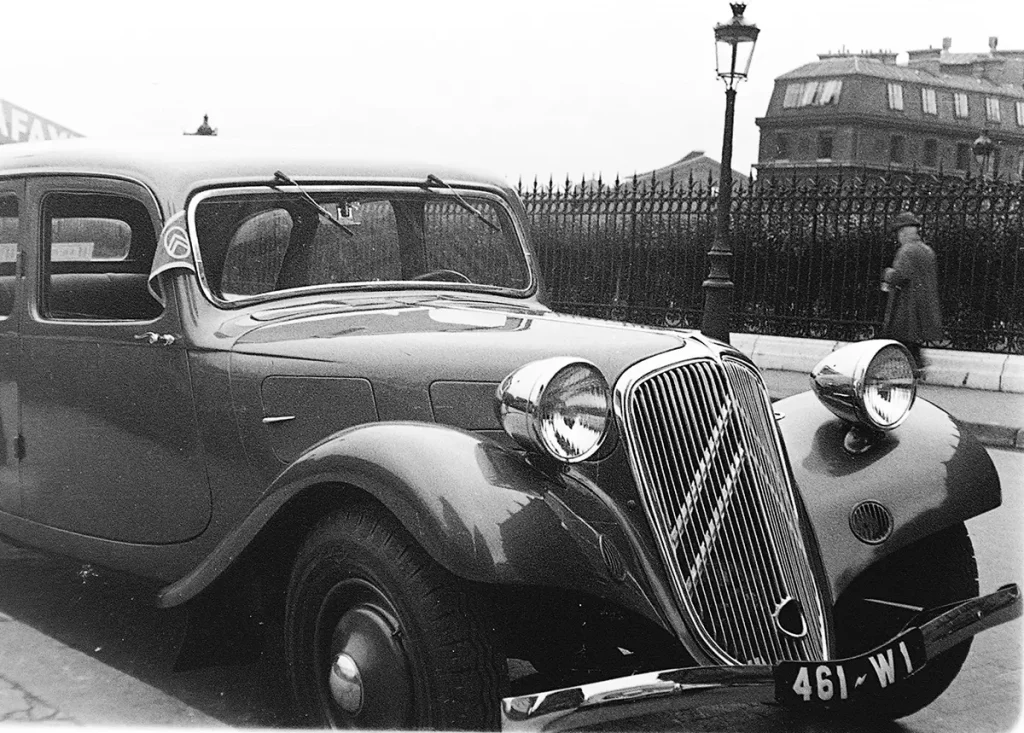
André Citroën always wanted more. He launched the Traction Avant. It was an absolute technical revolution:
- No more propshaft (front-wheel drive).
- No more separate chassis (monocoque body).
- Hydraulic brakes. The car held the road like no other (“The Queen of the Road”). But its development cost a fortune. The creditors grew impatient. Michelin took over the company and André Citroën died shortly afterwards, ruined but a visionary, in 1935.
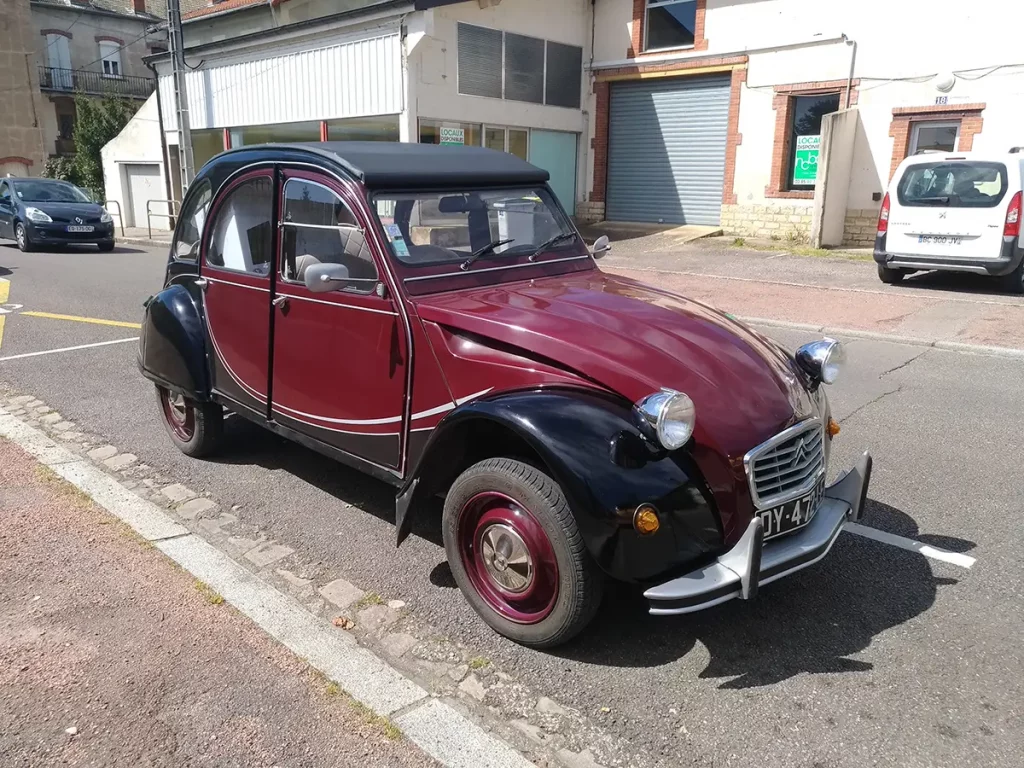
4. 1948: Four wheels under an umbrella (the 2CV)
During the war, the engineers hid a secret project: the TPV (Toute Petite Voiture, or “very small car”). The idea? A car able to cross a ploughed field with a basket of eggs on the seat without breaking a single one.
In 1948, the 2CV was unveiled. The press mocked its ugliness (“the ugly duckling”), but the public adored it. Economical, indestructible, convertible, it became the symbol of rural freedom. It would remain in production until 1990!
5. 1955: The UFO (the DS)
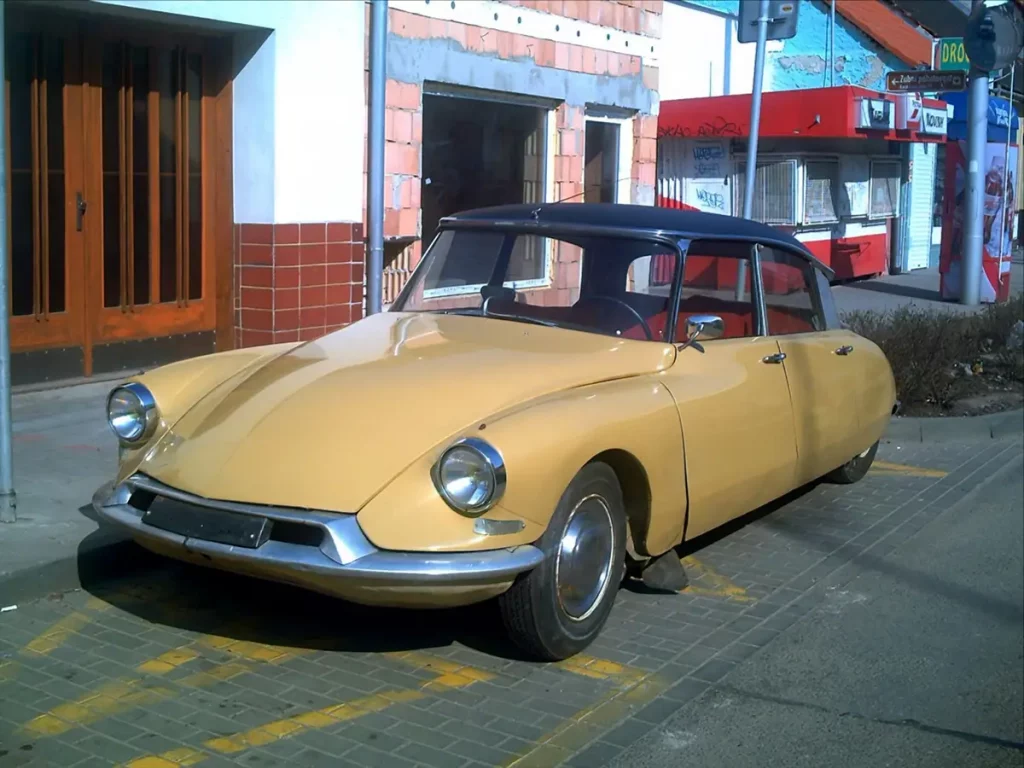
This is arguably the most important moment in the history of car design. At the 1955 Paris Motor Show, Citroën unveiled the DS 19.
Compared with the cars of the day (which still looked like pre-war carriages), the DS seemed to have come from March 2050.
- Aerodynamic lines by Flaminio Bertoni.
- Single-spoke steering wheel.
- And above all: hydropneumatic suspension. The car rises and lowers itself, smoothing out potholes (the famous “magic carpet”). 12,000 orders were placed on the first day of the show. A record that stood for 60 years (beaten by the Tesla Model 3).
6. 1970: Speed meets comfort (the SM)
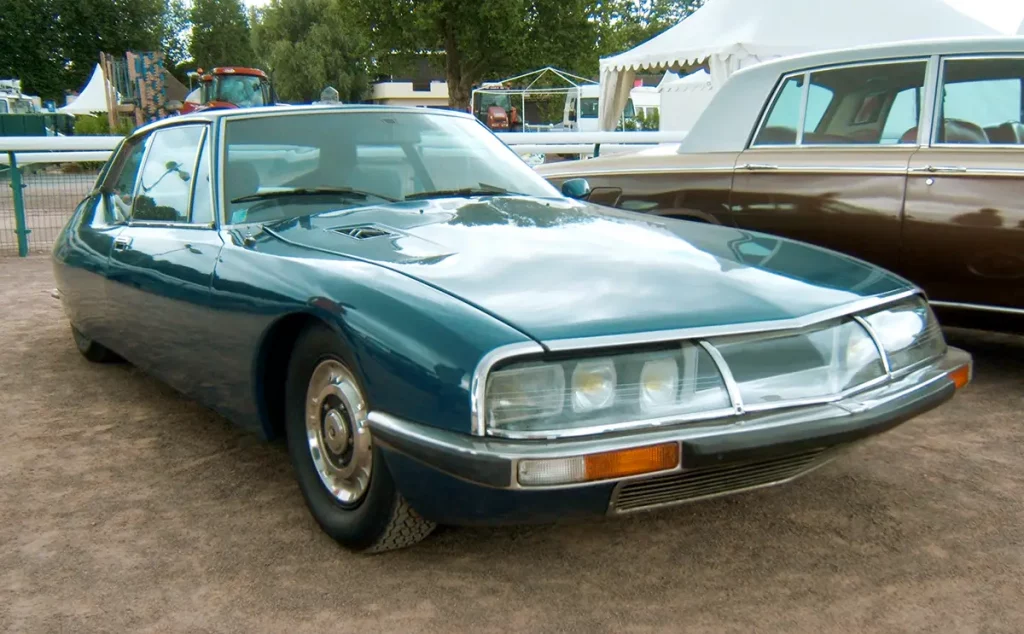
Citroën bought Maserati and decided to create the ultimate GT. The Citroën SM was born.
Futuristic lines, hydraulic suspension, variable-assistance steering (DIRAVI) and a Maserati V6 engine under the bonnet. It could cruise at 220 km/h in cathedral-like silence. Sadly, the 1973 oil crisis would kill off this masterpiece.
7. Today: Electric for everyone (Ami & C3)
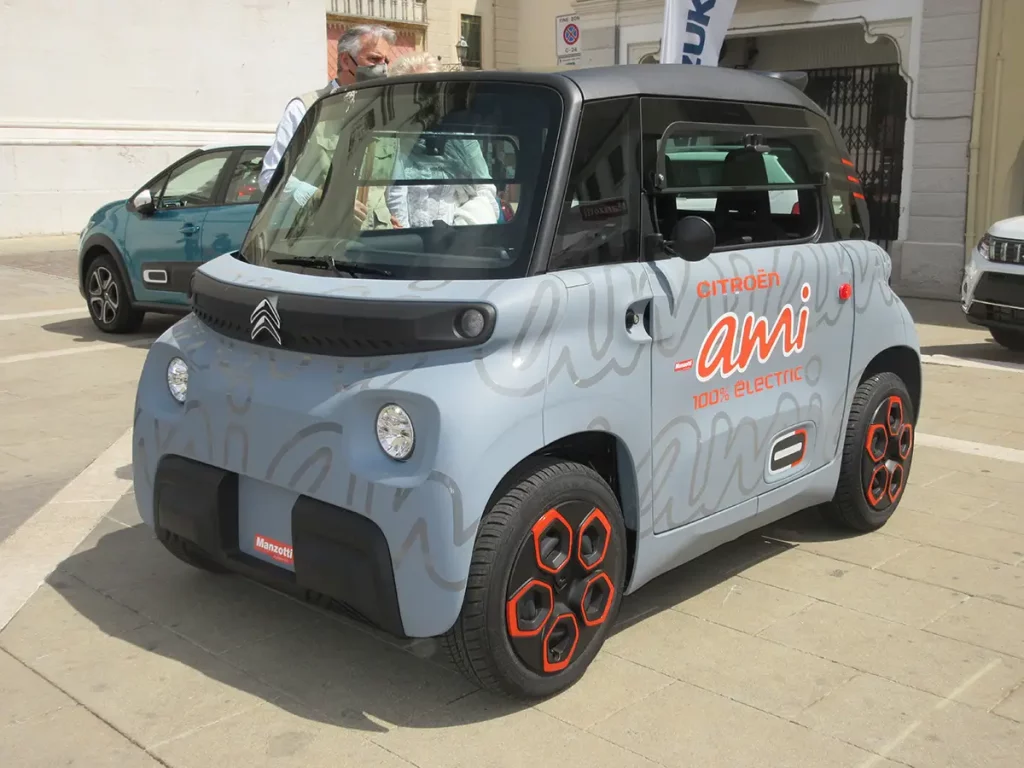
True to its quirky spirit, Citroën recently shook up the urban market with the Ami, a little electric cube that can be driven without a licence.
In 2024, the brand launched the new electric C3 for under €25,000, taking up the “people’s car” torch so dear to André Citroën, with a new oval logo that pays tribute to the one from 1919.
Conclusion: The art of being different
Citroën proves that a car does not have to look like any other. Driving a classic Citroën means accepting that you do nothing like everyone else: braking with a mushroom button (DS), turning a single-spoke steering wheel, or rising and lowering while standing still.
It is this uniqueness that has contributed to Citroën’s success over all these years.
A fan of the brand? Find all our Citroën posters, made in France, here
Read next.
The whole magazine →
Alfa Romeo History: From the First F1 Title to the Quadrifoglio, the Sporting Heart
A.L.F.A., the Scuderia Ferrari, the 8Cs at Le Mans, the first F1 title, the Giulia GTA, the 33 Stradale and the Quadrifoglio: the history of Alfa…
Read the article
Koenigsegg History: From a Young Swede’s Dream to Speed Records
Christian von Koenigsegg, the CC8S, the CCR’s record against the McLaren F1, the One:1, the Agera RS at 447 km/h and the Jesko: the history of…
Read the article
Mazda History: From the Rotary Engine to the MX-5, Japanese Daring
The rotary engine, the Cosmo Sport, the RX-7, victory at Le Mans in 1991 with the 787B and the MX-5: the history of Mazda in six…
Read the articleOn your walls.
All posters → Citroën VisaFrom €39.90Retro Ad
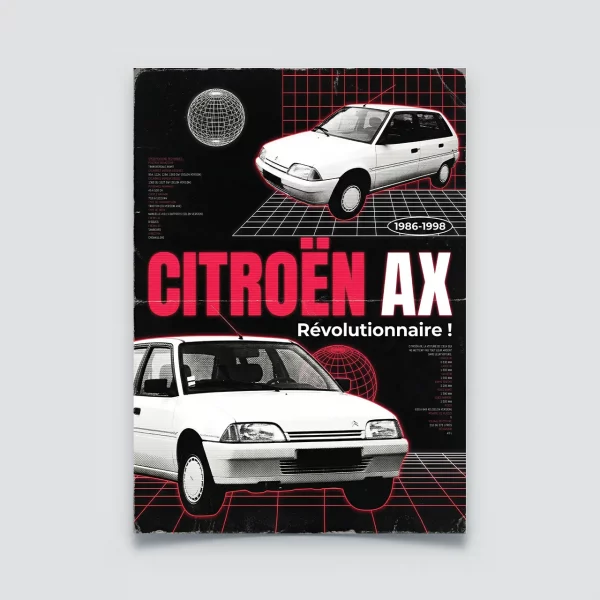 Citroën AXFrom €39.90Retromobile
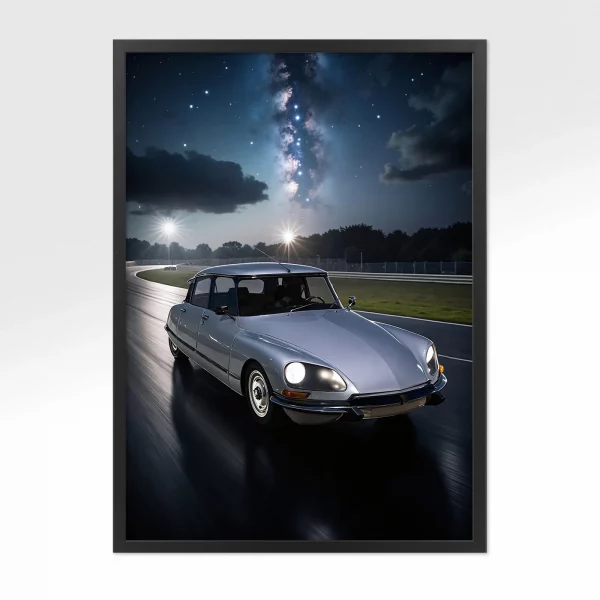 Citroën DSFrom €39.90Pure White
 Audi RS6 2013 · frontFrom €39.90Pure White
 Alfa Romeo Giulia TZ2 · frontFrom €39.9024 Hours of Le Mans
 Le Mans 2003 – Bentley Speed 8From €39.90Pure White
 Ferrari 250 GT Lusso · frontFrom €39.90Retro Ad
 BMW 3 Series Compact E36From €39.90