The History of Peugeot: From Coffee Mills to Hypercars, 200 Years of French Genius.
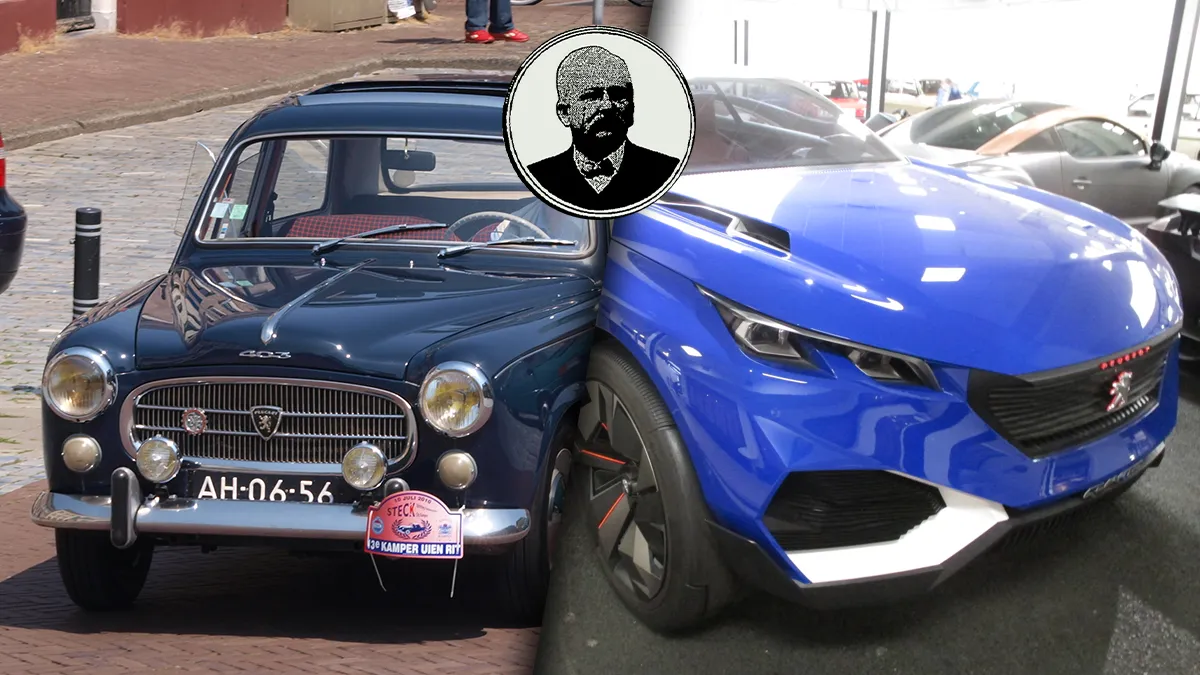
When you think of Peugeot, you immediately picture the little red 205 GTI hurtling down a country road or the majestic 406 Coupé. Yet the story of the Lion brand begins a long way from the tarmac… in your kitchen and your toolbox.
Founded in 1810, Peugeot is the oldest car brand still in business (even though car production only began later). Here is the story of a family industrial saga that shaped France.
1. 1810: Steel before Engines
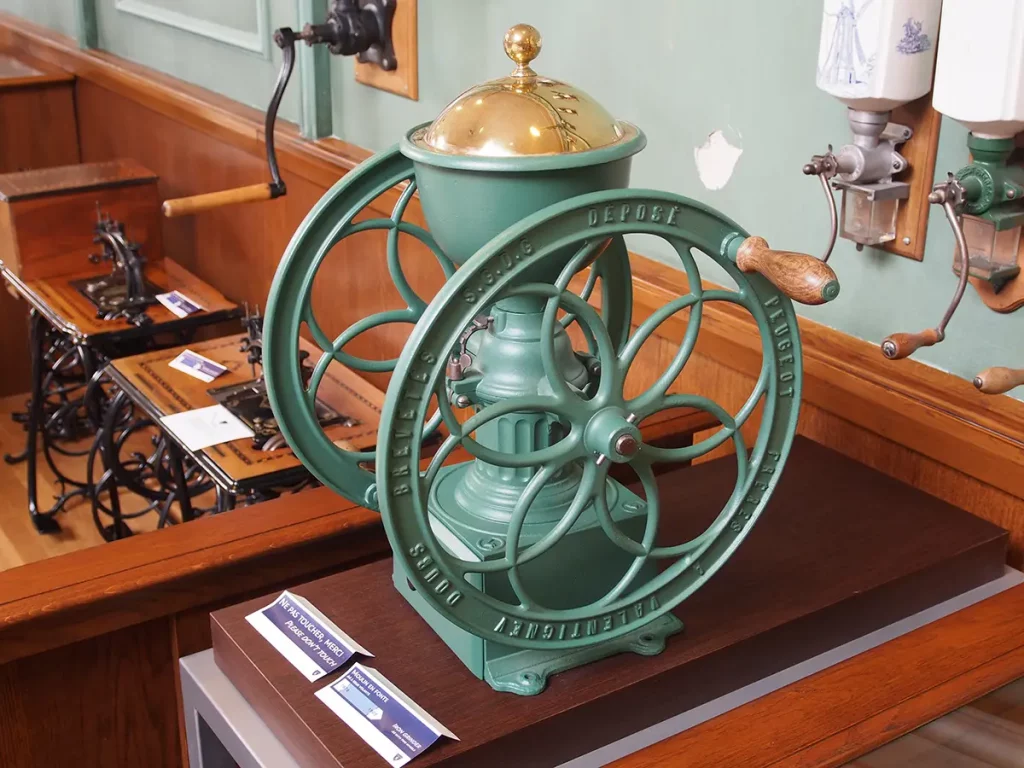
At the beginning of the 19th century, Jean-Pierre and Jean-Frédéric Peugeot turned the family mill at Hérimoncourt into a steel foundry.
They did not make cars, but anything that cuts and saws:
- Saw blades (the origin of the logo).
- Springs.
- Frames for crinoline dresses (the fashion of the day).
- And of course, the famous coffee/pepper mills (from 1840), which are still considered the best in the world today.
Why a Lion? Registered in 1858, the logo of the Lion walking on an arrow symbolised the three qualities of Peugeot saw blades: the strength of the teeth, the flexibility of the blade and the speed of the cut.
2. 1890: Armand Peugeot and steam
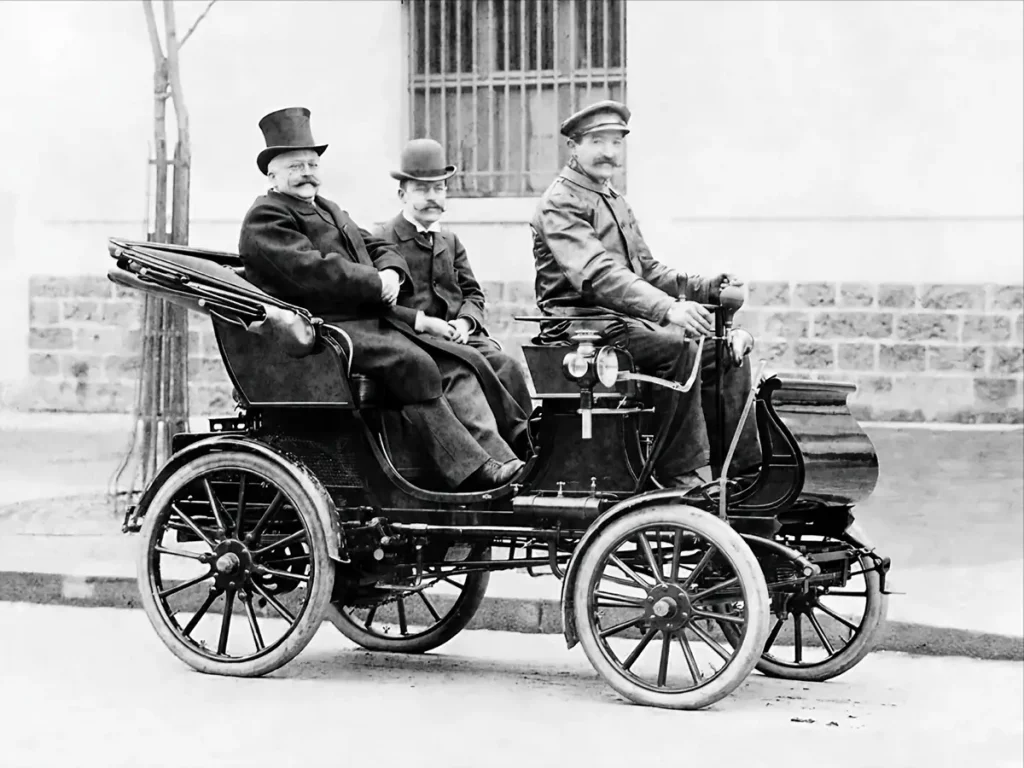
It was Armand Peugeot, a visionary, who sensed that the future lay in individual transport. After a first attempt with a steam tricycle in 1889, he quickly realised that petrol was the future.
In 1890, he launched the Type 2, fitted with a Daimler engine, leading to the Peugeot Type 28 in the late 1890s. It was the start of the motoring adventure.
The Sochaux factory, the brand’s historic birthplace, was founded in 1912. It remains the beating heart of the French car industry today.
3. 1929: The invention of the central “Zero”
Have you noticed that all (or almost all) Peugeots carry a three-digit number with a zero in the middle?
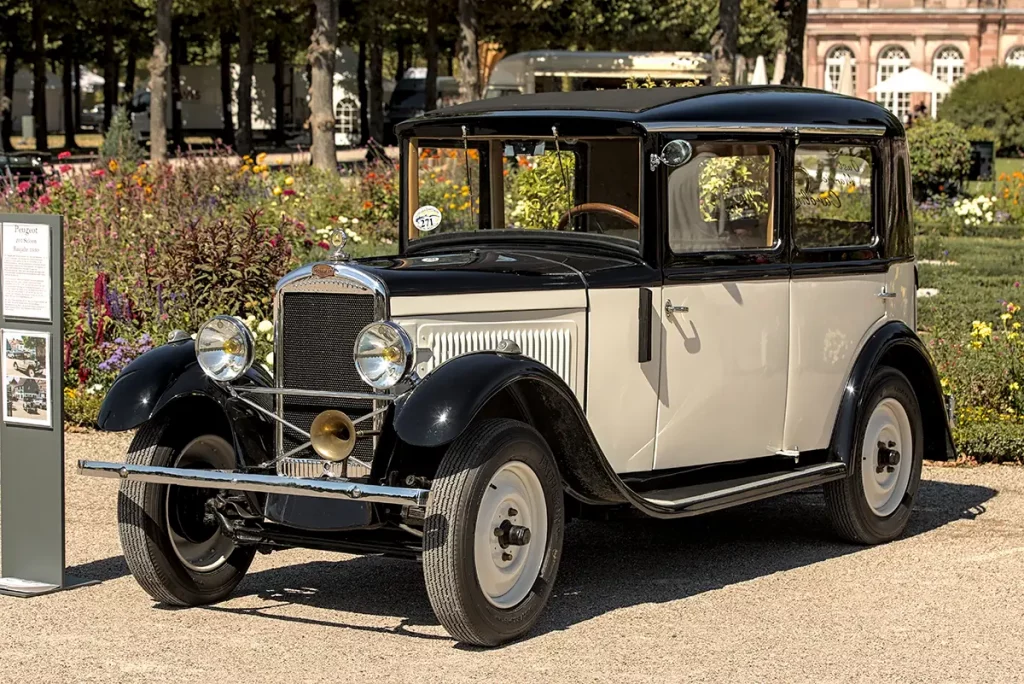
It all began with the Peugeot 201, unveiled at the Paris Motor Show (Mondial de l’Auto) in 1929. This numbering system (201, 301, 401…) made it possible to identify the size of the vehicle (first digit) and its generation (last digit).
Peugeot even registered this system as a trademark! That is why Porsche had to rename its 901 as the 911 in 1963, under pressure from the French brand.
4. 1983: The Sacred Number that saved everything
In the early 1980s, Peugeot was in trouble. The brand was seen as staid and ageing. Bankruptcy loomed.
One man, Jean Boillot, bet everything on a small car: the 205.
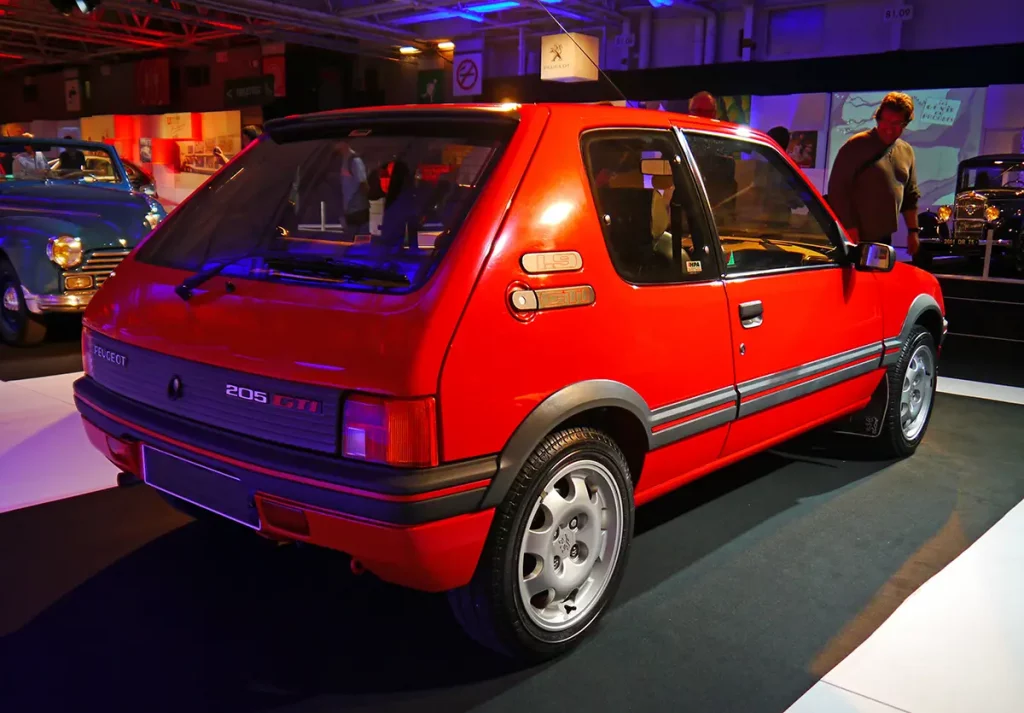
Launched in 1983, it was a runaway success. Reliable, pretty and modern, it saved the company.
But it was its sporty version, the 205 GTI (1.6L 105 hp, then 1.9L 130 hp), that created the legend. It became the dream of a whole generation and the queen of the “pocket rockets”.
5. The Lion’s Claw in competition
Peugeot also has a staggering sporting record, often where you least expect it:
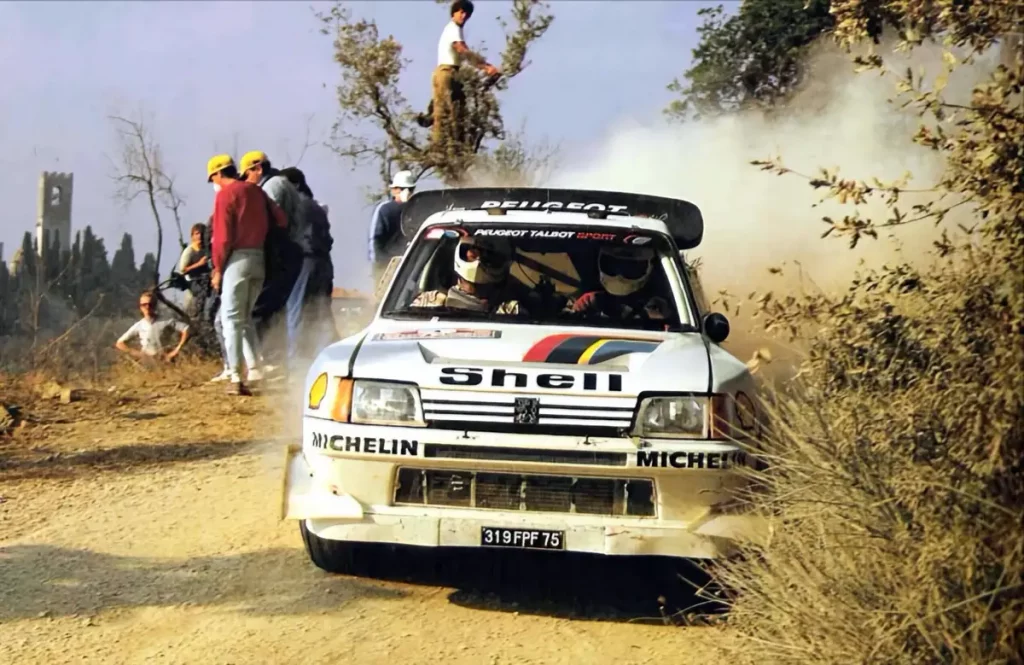
- Rallying: In the 1980s, the monstrous Group B 205 Turbo 16 dominated the world championship. Later, the 206 WRC would carry the torch.
- Endurance: In 1992 and 1993, the Peugeot 905 and its shrieking V10 won the 24 Hours of Le Mans. The feat was repeated in 2009 with the 908 HDi FAP (diesel).
- The Dakar: From the 405 T16 to the recent 3008 DKR, Peugeot is the king of the desert.
6. Today: Boldness regained (Stellantis)
Since the creation of the Stellantis group in 2021, Peugeot has positioned itself as a “premium mainstream” brand. The design has become ultra-aggressive, with the famous light fangs (the “sabres”) at the front and the claws at the rear.
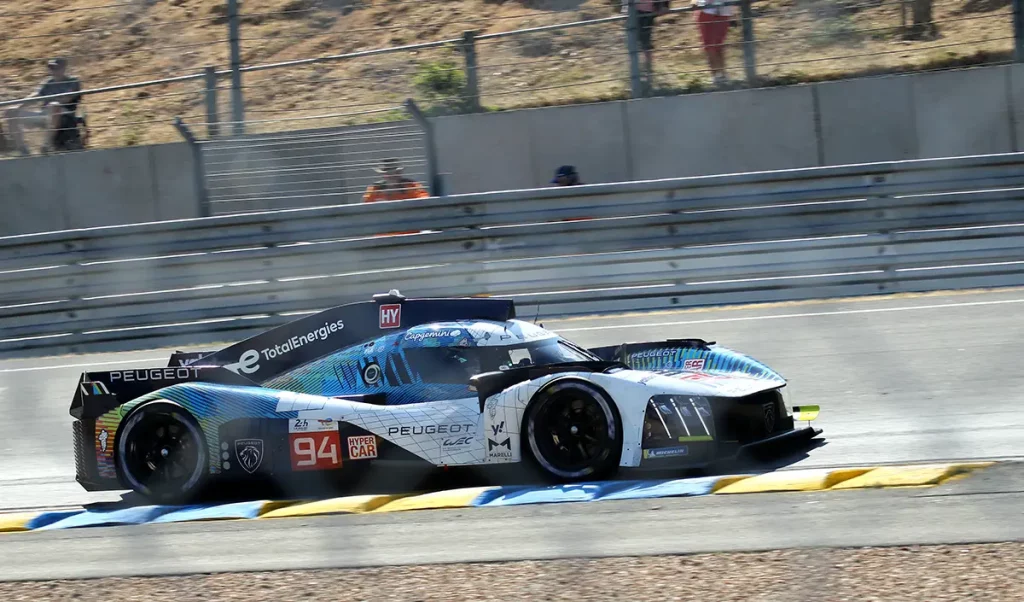
The symbol of this new era is the 9X8 Hypercar, racing at Le Mans since 2022. Its distinctive feature? It has no rear wing! An aerodynamic challenge that proves Armand Peugeot’s spirit of innovation is still alive (although the results might make you question that choice).
Conclusion: A heritage worth displaying
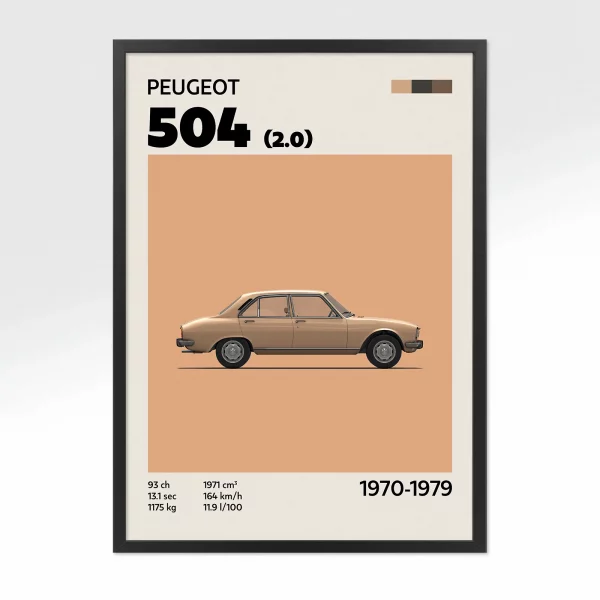
Peugeot is much more than a manufacturer; it is a piece of French history. From the toughness of the 504 (available as a youngtimer poster here) to the liveliness of the 205 GTI on country lanes, every model tells a story.
Discover the 205 and all the iconic vehicles of that generation in our Rétro-Pub collection.
Read next.
The whole magazine →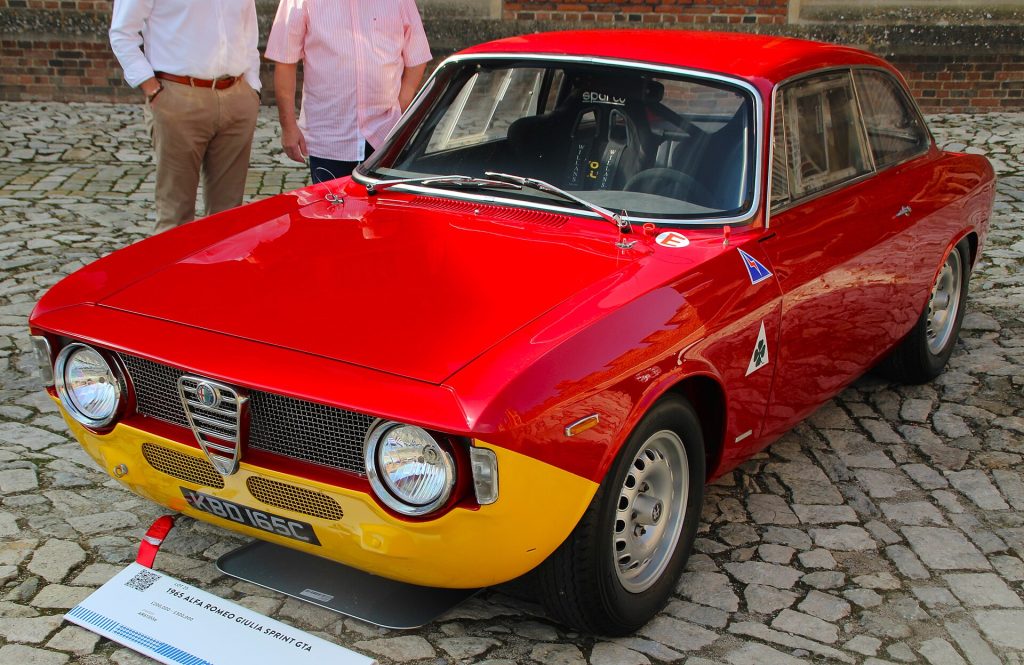
Alfa Romeo History: From the First F1 Title to the Quadrifoglio, the Sporting Heart
A.L.F.A., the Scuderia Ferrari, the 8Cs at Le Mans, the first F1 title, the Giulia GTA, the 33 Stradale and the Quadrifoglio: the history of Alfa…
Read the article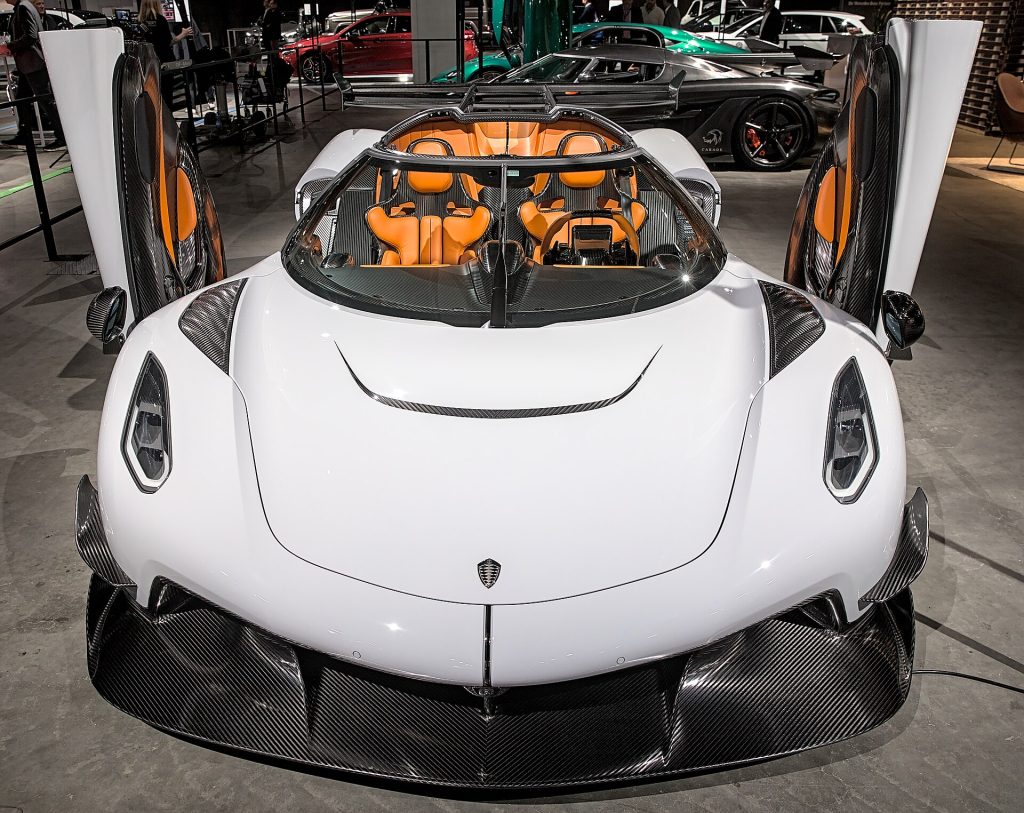
Koenigsegg History: From a Young Swede’s Dream to Speed Records
Christian von Koenigsegg, the CC8S, the CCR’s record against the McLaren F1, the One:1, the Agera RS at 447 km/h and the Jesko: the history of…
Read the article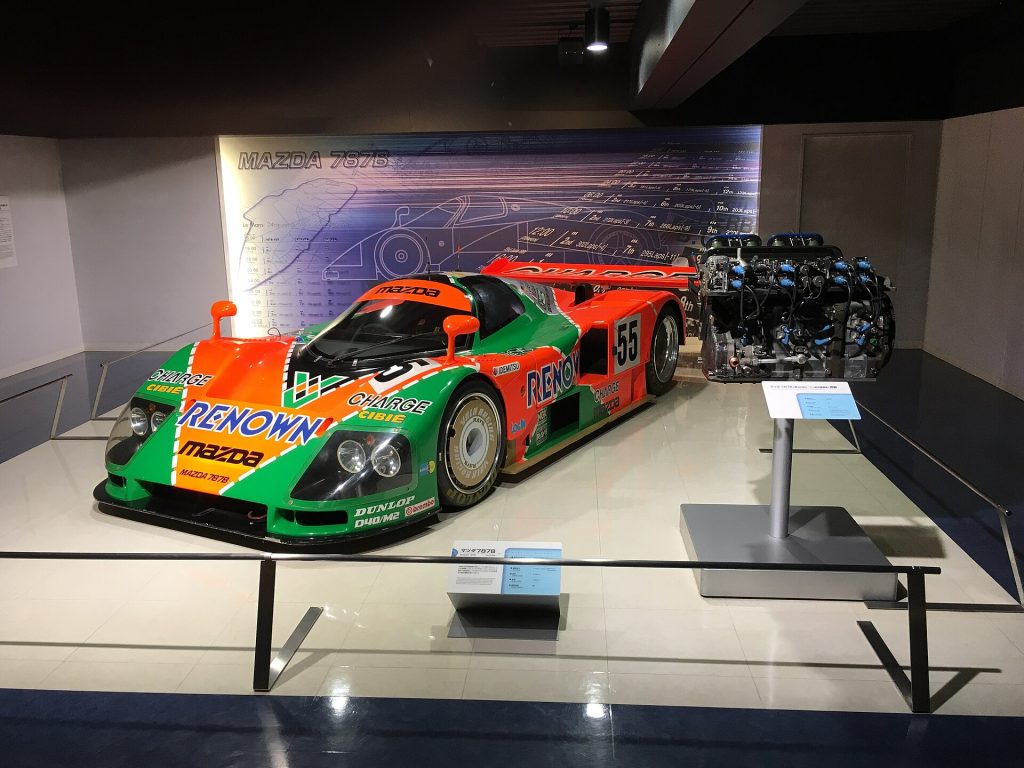
Mazda History: From the Rotary Engine to the MX-5, Japanese Daring
The rotary engine, the Cosmo Sport, the RX-7, victory at Le Mans in 1991 with the 787B and the MX-5: the history of Mazda in six…
Read the articleOn your walls.
All posters →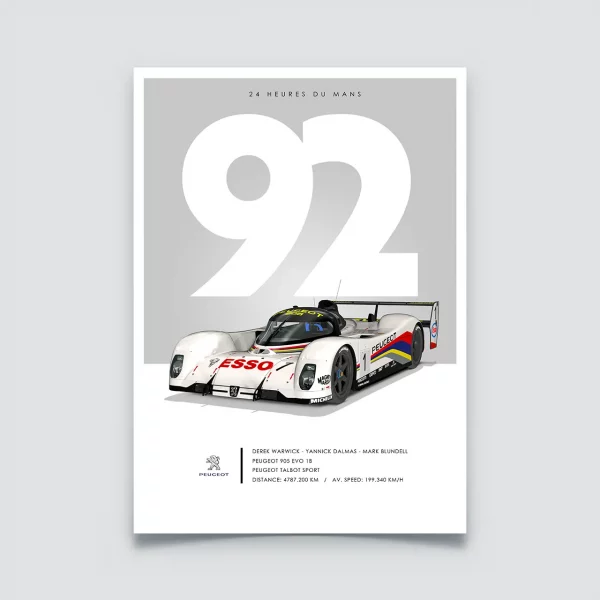 Le Mans 1992 – Peugeot 905 Evo 1BFrom €39.90Youngtimer
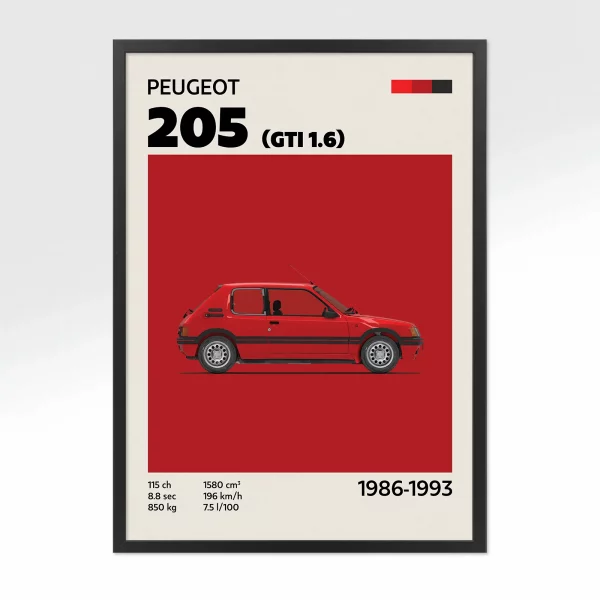 Red Peugeot 205 GTIFrom €39.90Youngtimer
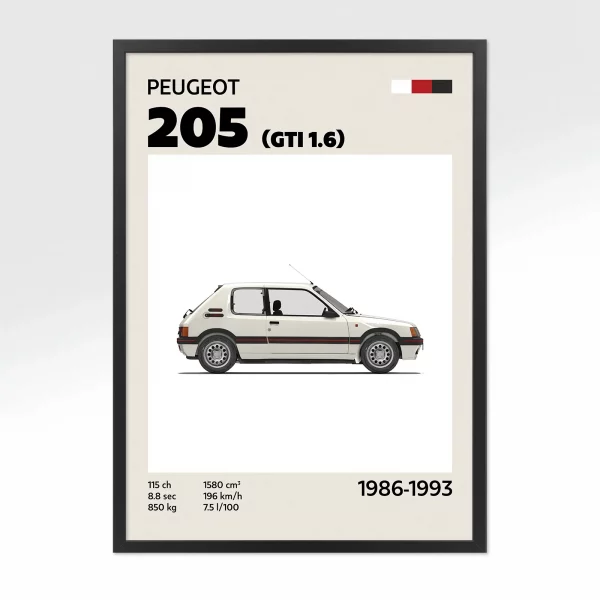 White Peugeot 205 GTIFrom €39.9024 Hours of Le Mans
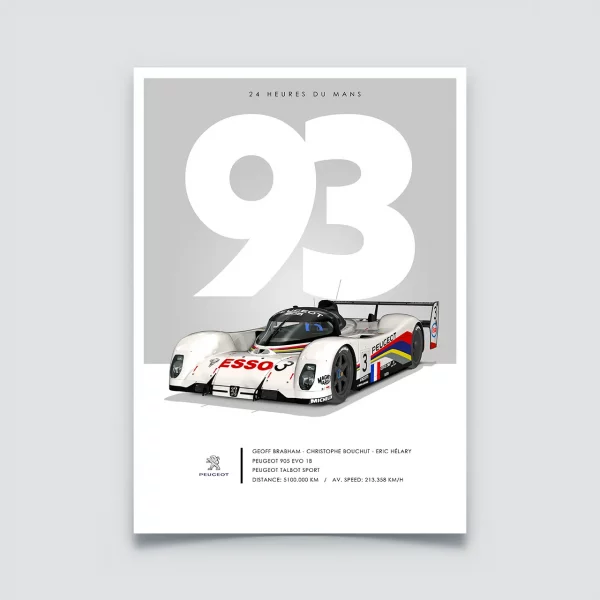 Le Mans 1993 – Peugeot 905 Evo 1BFrom €39.90Retro Ad
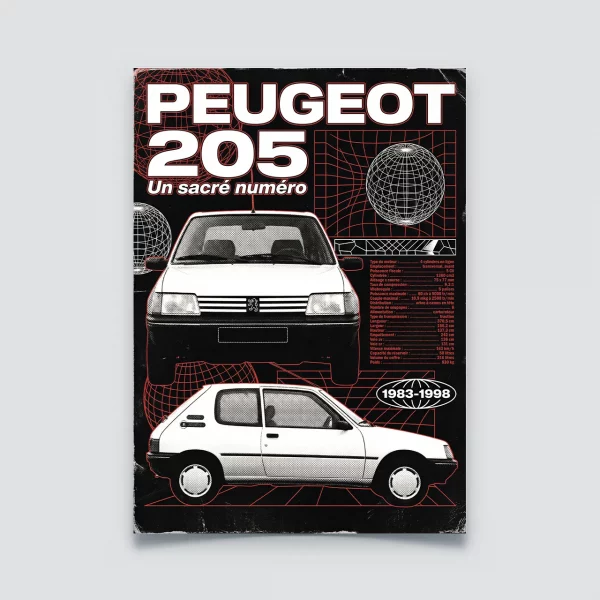 Peugeot 205From €39.90Youngtimer
 Peugeot 504From €39.90Retro Ad
 Peugeot 106From €39.90