Bugatti History: From the Type 35 to the Tourbillon, the Saga of a Legend.
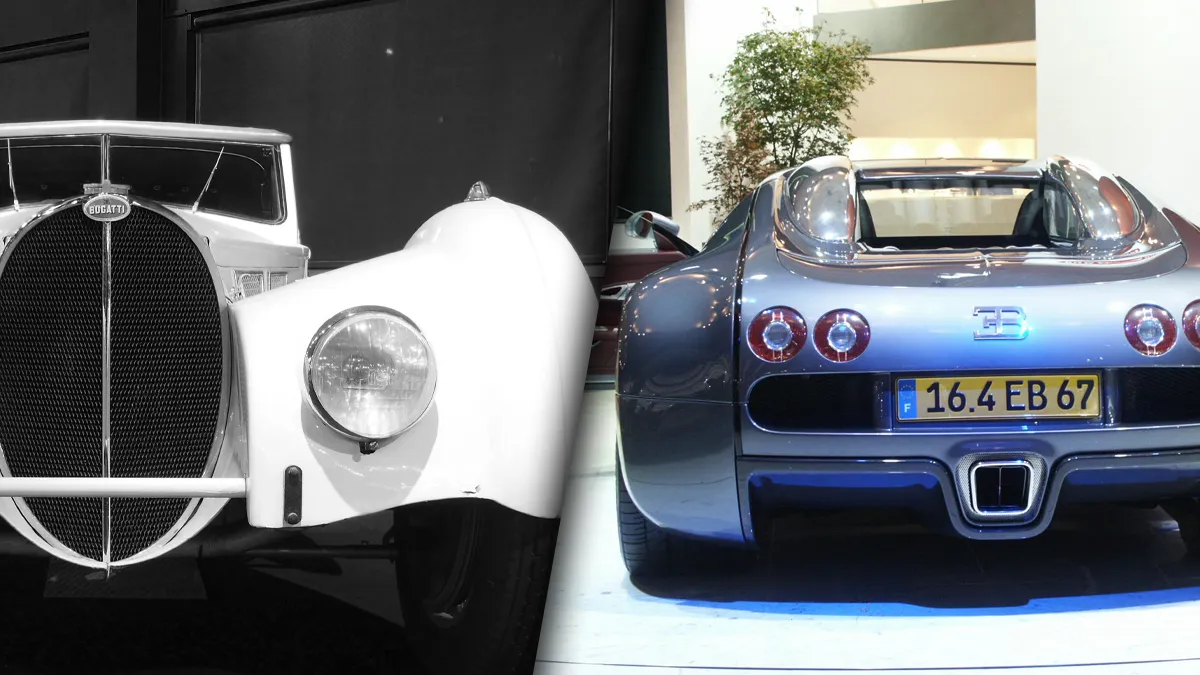
“If it is comparable, it is no longer a Bugatti.” These words of Ettore Bugatti still resonate today as the brand’s ultimate mantra. More than a carmaker, Bugatti is an anomaly in the industry: a family of artists who set about building the fastest machines in the world.
From Alsace at the turn of the century to the modern era of hyper-luxury, a look back at a saga of triumphs, tragedies and unexpected resurrections.
1. The Age of the Artists (1909-1939): The birth of the myth
It all began in 1909 in Molsheim, Alsace. Ettore Bugatti, from a family of Italian artists (his father Carlo made furniture, his brother Rembrandt was a sculptor), founded his factory. For him, a car had to be as beautiful to look at (even the engine!) as it was effective on the road.
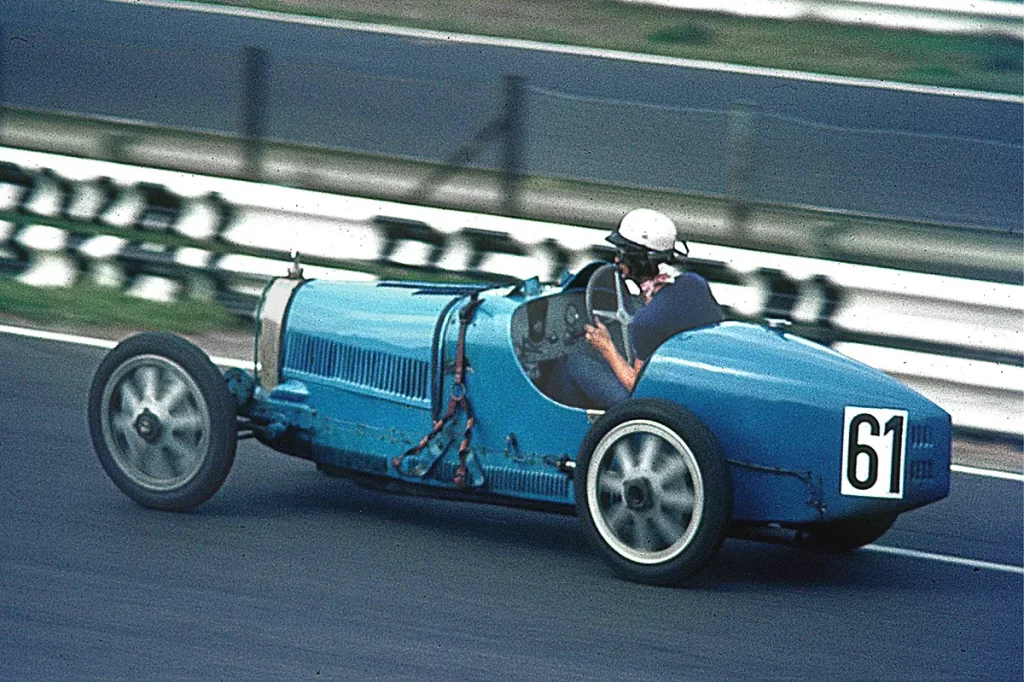
The legend was forged on the circuits with the Type 35. Launched in 1924, this small blue car with its horseshoe grille went on to claim more than 2,000 victories in competition, a record unmatched to this day.
But Bugatti also meant extravagance, with the Type 41 Royale (1926). Intended for kings and emperors, it was more than 6 metres long and its 12.7-litre engine was so powerful that it ended up powering railcars after the car’s commercial failure due to the Great Depression.
2. Genius and Tragedy: Jean Bugatti
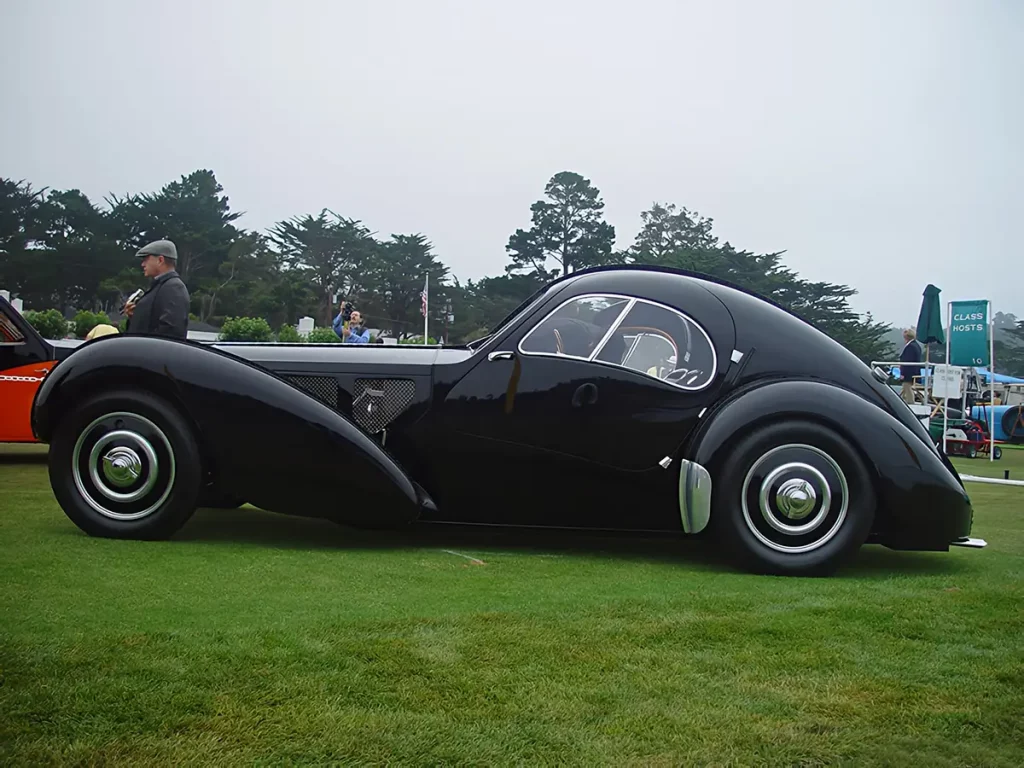
In the 1930s, Ettore’s son, Jean Bugatti, grew in importance. A designer of genius, he drew the Type 57 SC Atlantic, now considered the most expensive and most beautiful car in the world, recognisable by its riveted “spine”.
But fate struck on 11 August 1939. While testing the Le Mans-winning Type 57C “Tank”, Jean was killed on a country road near the factory while swerving to avoid a cyclist. Ettore never truly recovered. The Second World War and Ettore’s death in 1947 sealed the end of the first chapter. The brand fell dormant for 40 years.
3. The Italian Interlude: The EB110 (1987-1995)
In 1987, Italian entrepreneur Romano Artioli bought the brand and built an ultra-modern factory (the “Blue Factory”) in Campogalliano, Italy.
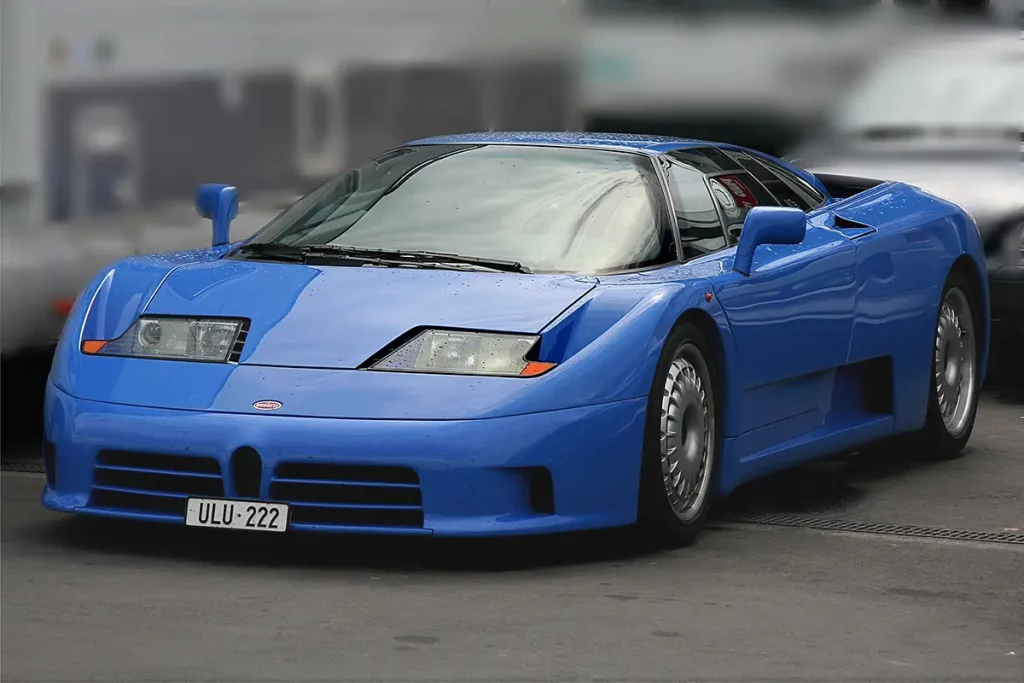
He launched the Bugatti EB110 (for Ettore’s 110th anniversary). It was a technological monster: a carbon chassis (a first for a production car), four-wheel drive and a quad-turbo V12. Michael Schumacher himself bought a yellow one.
Despite its qualities, the economic crisis of the 1990s got the better of the Italian adventure. Bugatti went bankrupt in 1995.
4. The Volkswagen Era: The Quest for 400 km/h (1998-2020)
In 1998, the Volkswagen Group bought the rights and brought production back to Molsheim, in a new “Atelier”. The goal was simple: to create the fastest, most powerful and most expensive production car in the world.
- The Veyron 16.4 (2005): It shocked the world. 1,001 hp, 407 km/h, an 8-litre W16 engine. It was the Concorde of the road.
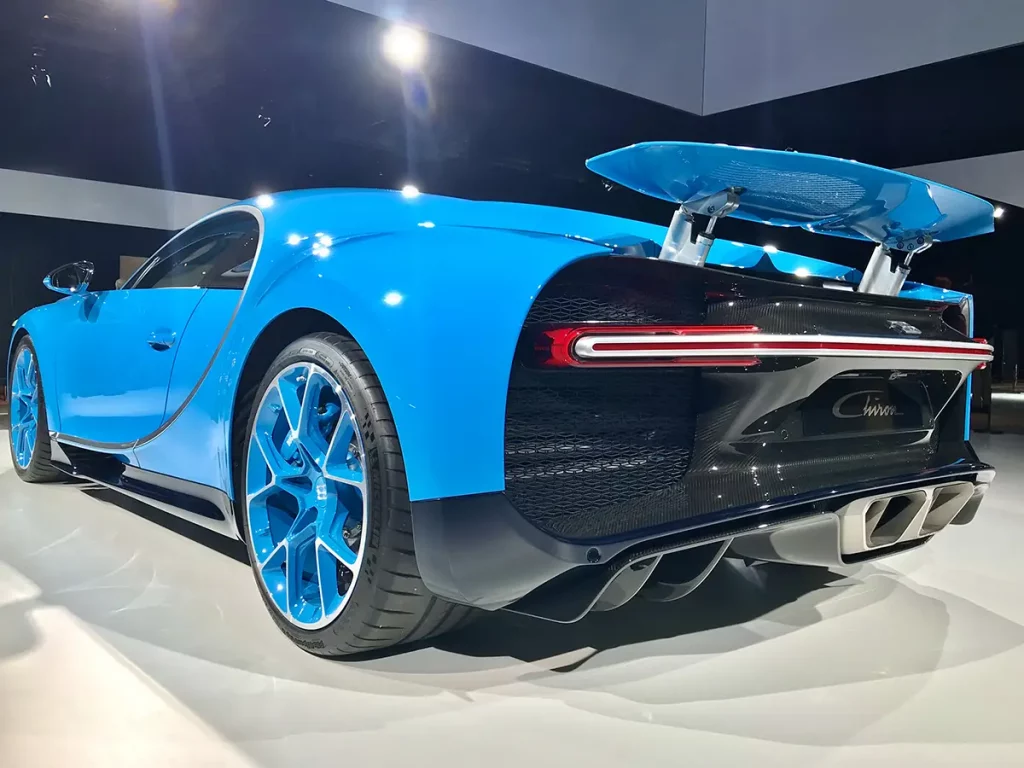
- The Chiron (2016): It pushed the envelope even further. 1,500 hp (later 1,600). In 2019, a prototype version derived from the Chiron Super Sport 300+ became the first car to break the 490.48 km/h barrier (Find our Super Sport poster dedicated to the Chiron Pur Sport here).
5. The Future: Bugatti Rimac and the Tourbillon (Since 2021)
In 2021, an earthquake shook the industry: Bugatti came under the control of a joint venture led by the young Croatian electric-car prodigy Mate Rimac (in partnership with Porsche). There were fears that Bugatti would go 100% electric and lose its mechanical soul. Nothing of the sort.
In June 2024, Bugatti unveiled the Chiron’s successor: the Bugatti Tourbillon.
True to the Swiss watchmaking from which it takes its name, it rejects full electrification in favour of an all-new combustion engine: an 8.3-litre naturally aspirated V16, combined with 3 electric motors, for a total output of 1,800 hp.
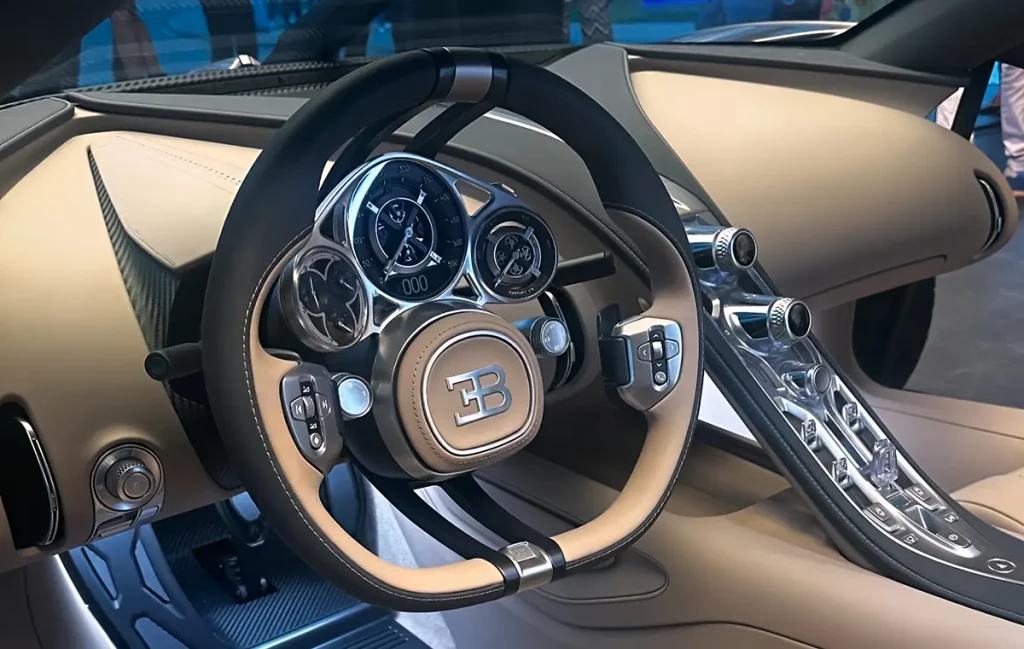
Its speedometer, fully analogue and made from titanium and sapphire by Swiss watchmakers, is already a museum piece. Bugatti proves that it remains a master of time and mechanics.
Read next.
The whole magazine →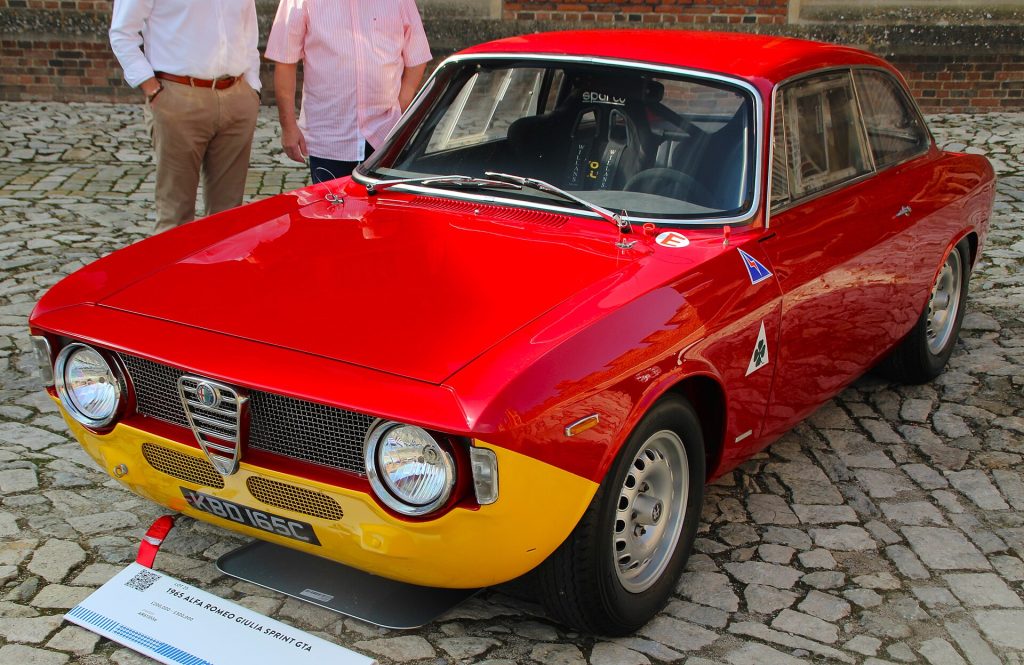
Alfa Romeo History: From the First F1 Title to the Quadrifoglio, the Sporting Heart
A.L.F.A., the Scuderia Ferrari, the 8Cs at Le Mans, the first F1 title, the Giulia GTA, the 33 Stradale and the Quadrifoglio: the history of Alfa…
Read the article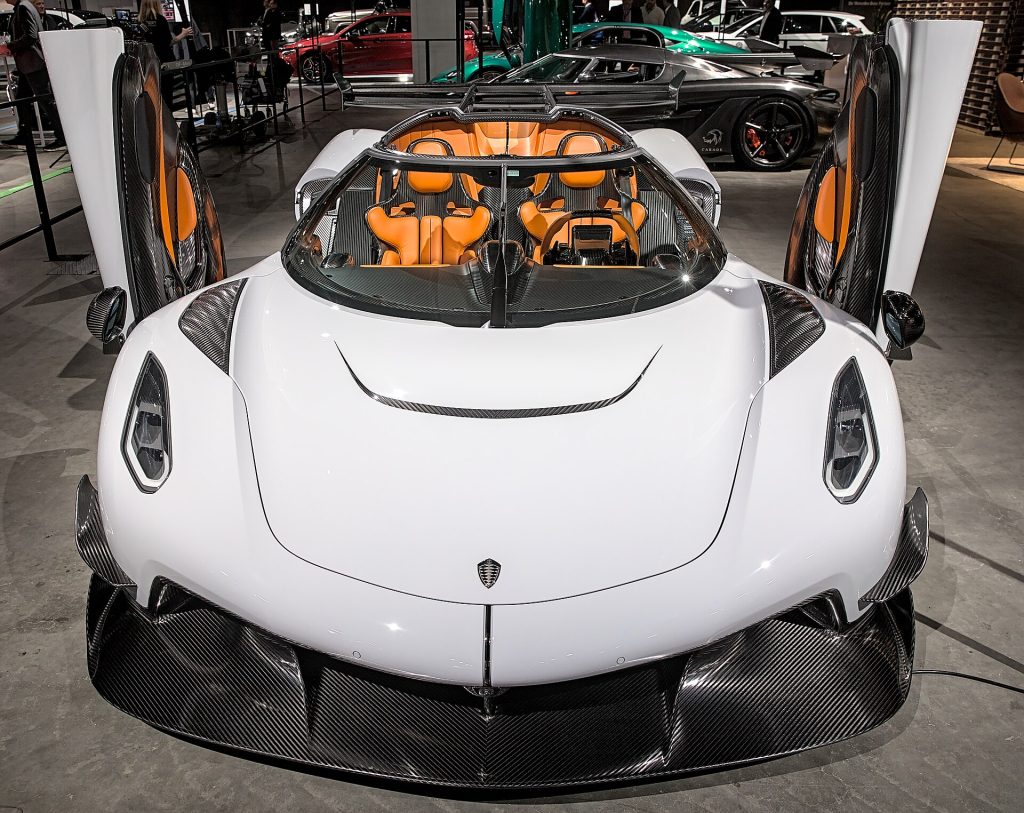
Koenigsegg History: From a Young Swede’s Dream to Speed Records
Christian von Koenigsegg, the CC8S, the CCR’s record against the McLaren F1, the One:1, the Agera RS at 447 km/h and the Jesko: the history of…
Read the article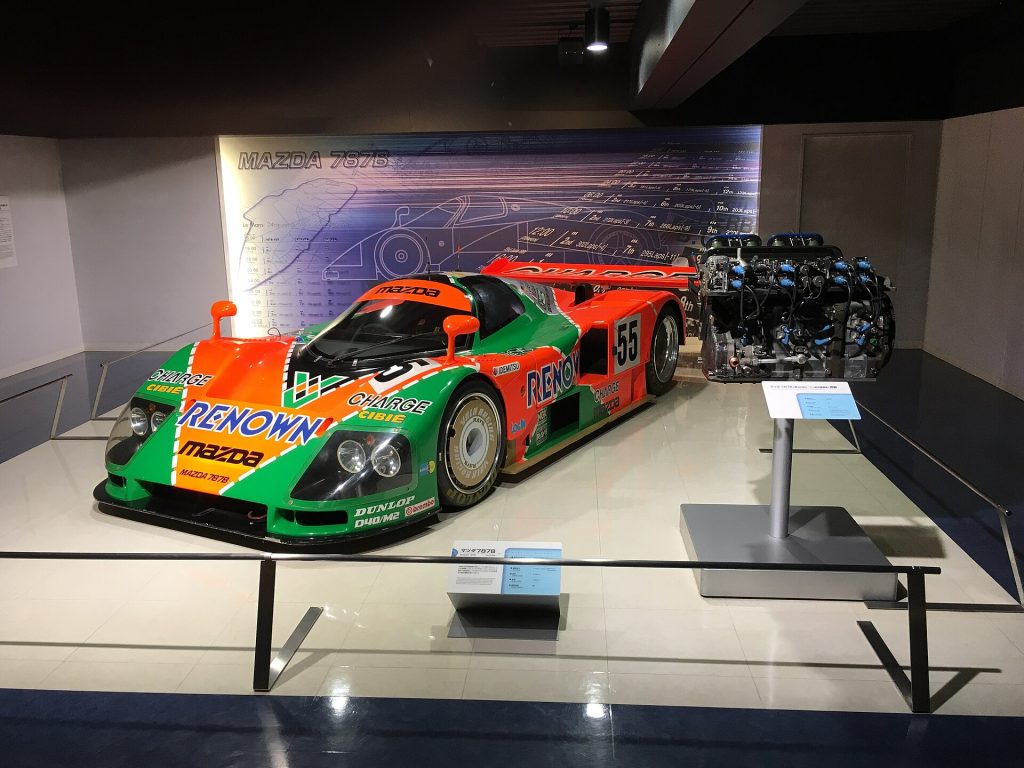
Mazda History: From the Rotary Engine to the MX-5, Japanese Daring
The rotary engine, the Cosmo Sport, the RX-7, victory at Le Mans in 1991 with the 787B and the MX-5: the history of Mazda in six…
Read the articleOn your walls.
All posters →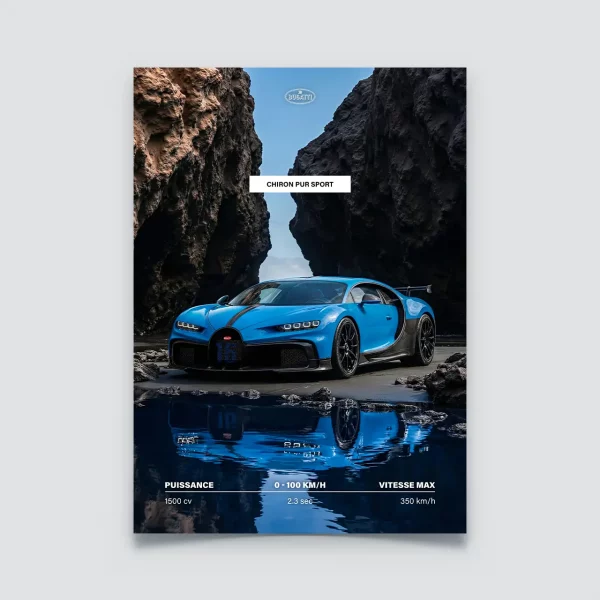 Bugatti Chiron Pur SportFrom €39.90Super Sport
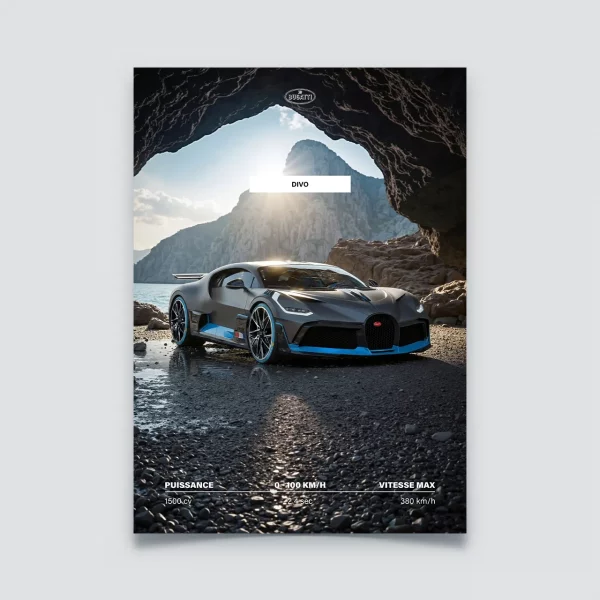 Bugatti DivoFrom €39.90Super Sport
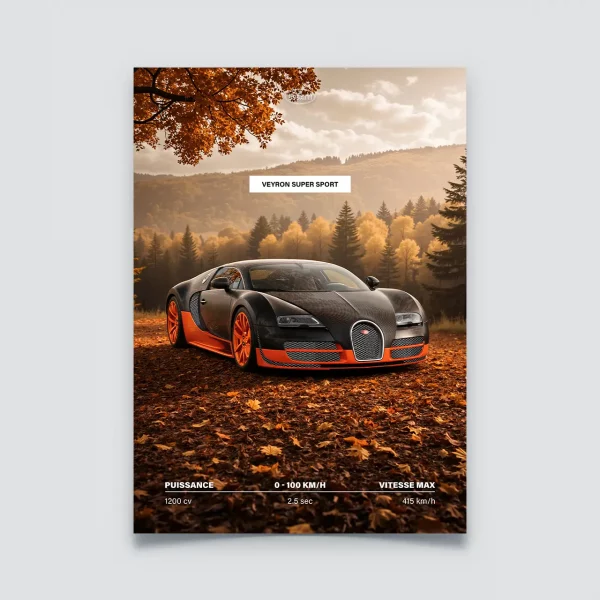 Bugatti Veyron Super SportFrom €39.90Pure White
 Porsche Cayenne Turbo · frontFrom €39.90Pure White
 Lamborghini Huracan Performante · frontFrom €39.90Pure White
 BMW i8 · frontFrom €39.9024 Hours of Le Mans
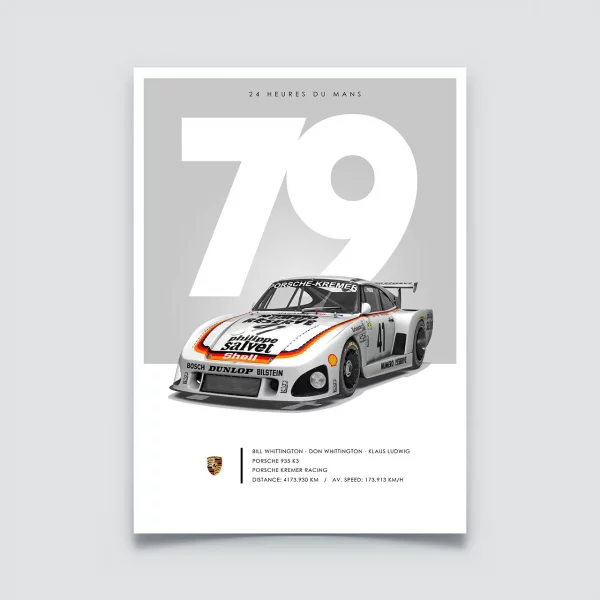 Le Mans 1979 – Porsche 935 K3From €39.90Pure White
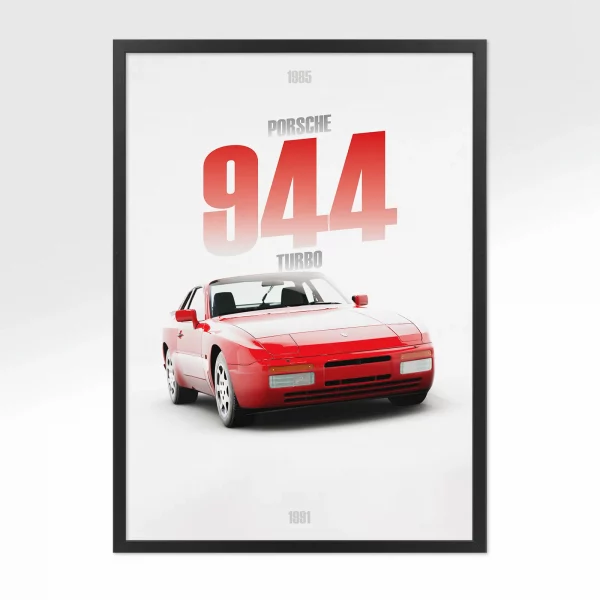 Porsche 944 Turbo · frontFrom €39.90